A well-maintained pool or spa is defined by its water quality. Poor water chemistry is not just an aesthetic problem - it creates genuine health and safety risks for users, accelerates damage to pool infrastructure, and can result in regulatory enforcement action for operators. Getting it right requires the right equipment, properly specified and consistently maintained.
Hydrotec provides water treatment systems for commercial swimming pools, hotel and resort pools, leisure centres, spas, and hydrotherapy pools.

Pool water quality is a health and safety obligation, not just an operational preference.
Inadequately treated pool water creates conditions in which harmful bacteria, algae, and pathogens can proliferate. Poorly balanced water also causes discomfort to swimmers - eye and skin irritation, strong chlorine odour, and cloudy water are all symptoms of poor water chemistry rather than, as is commonly assumed, too much chlorine. In fact these are typically signs of insufficient sanitiser, incorrect pH, or inadequate filtration.
For commercial operators, pool water quality is subject to regulatory oversight in most jurisdictions. In the UK, the Pool Water Treatment Advisory Group (PWTAG) publishes the widely adopted technical standards for pool water treatment, and local authority environmental health teams inspect commercial pools against these benchmarks. Across the Gulf, operators are equally subject to municipal health authority requirements. Failure to meet required standards can result in enforced closure, with the reputational and financial consequences that come with it.
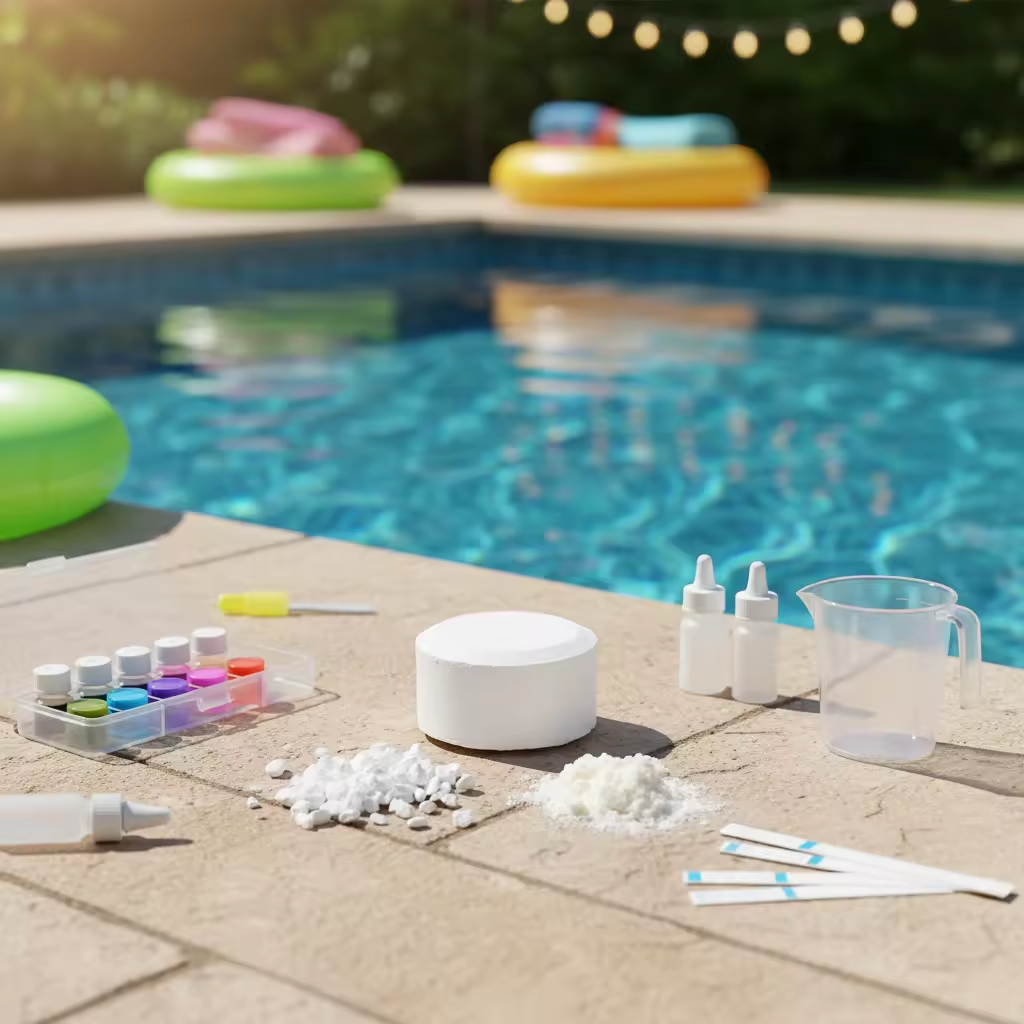
The treatment challenge varies significantly between pool types.
Outdoor pools in hot climates face intense UV exposure and high bather loads relative to volume, driving rapid chlorine degradation and making consistent dosing critical. Indoor pools generate significant quantities of combined chlorine (chloramines) - the compounds responsible for the characteristic smell often associated with pools - which require active management through ventilation and water treatment. Spa and hydrotherapy pools operate at elevated temperatures that accelerate bacterial growth and chemical consumption, requiring more intensive treatment regimes and more frequent monitoring relative to their volume.
Our Solutions
Disinfection & Dosing
- Automated chlorine dosing systems - liquid, granular, or electrolytic generation
- pH correction dosing - automated acid or alkali dosing to maintain the correct treatment range
- Coagulant dosing for improved filtration performance and water clarity
- UV disinfection as a supplementary treatment to reduce chlorine demand and manage chloramines
- Specialist dosing regimes for spa and hydrotherapy pools operating at elevated temperatures
Filtration
- Sand filtration - the standard workhorse of pool water treatment, removing suspended solids and turbidity
- Activated carbon filtration for removal of chloramines, taste, and odour
- Multimedia filtration for improved solids removal where higher water quality is required
- Systems sized to pool volume and anticipated bather load
Monitoring & Control
- Automated dosing controllers monitoring chlorine and pH in real time and dosing accordingly
- Online monitoring options providing continuous visibility of water parameters
- Remote access and alerting so issues can be identified and responded to without delay
Pool Types Covered
- Hotel and resort pools - indoor and outdoor
- Leisure centres and public swimming pools
- Spa pools and hot tubs
- Hydrotherapy and therapeutic pools
- School and university pools
Our Offering
We provide the full water treatment package for pool and spa operators - from water treatment system design and equipment supply through to installation, commissioning, and ongoing maintenance. Our maintenance contracts cover routine chemical dosing checks, equipment servicing, water sampling, and parameter adjustment, giving operators confidence that their pool water is consistently within the required range.
- System design and equipment specification
- Supply, installation, and commissioning
- Automated dosing and monitoring systems as standard
- Chemical supply
- Ongoing maintenance contracts and water quality monitoring
- Reactive support and emergency call-out