Water systems in buildings provide ideal conditions for bacteria to survive and multiply - warmth, moisture, nutrients from scale and sediment, and surfaces on which biofilm can form. Left uncontrolled, waterborne bacteria present a serious and well-documented risk to building occupants. Legionella pneumophila, which causes Legionnaire's disease, is the most significant of these - a potentially fatal respiratory illness acquired by inhaling contaminated aerosols from water systems including showers, cooling towers, and spa pools.Bacteria can survive, multiply, and spread in water systems.
Hydrotec provides bacterial control solutions for commercial and mixed-use buildings across the world, working with M&E consultants, contractors, facilities managers, and building owners to specify and maintain effective systems.

Legionella thrives where conventional temperature control falls short.
The conventional approach to Legionella control in hot and cold water systems is thermal - storing hot water above 60°C and delivering it at outlets above 55°C, while keeping cold water below 20°C. This approach is well-established and forms the basis of the guidance in ACOP L8 and HSG 274. However, maintaining these temperatures consistently across a complex water distribution system is operationally demanding, energy-intensive, and carries a real scalding risk at outlets - particularly in settings where vulnerable users are present.
Where pipework is long, flow is intermittent, or the system has changed over time through extensions and modifications, achieving the required temperatures at every outlet becomes progressively harder. Dead legs, infrequently used outlets, and thermostatic mixing valves all create opportunities for water to sit at temperatures in which Legionella multiplies rapidly - between 20°C and 45°C.
Secondary chemical disinfection provides an alternative or supplementary approach that is not dependent on temperature alone. Chlorine dioxide and copper-silver ionisation both provide residual protection throughout the distribution system, allowing water distribution temperatures to be reduced while maintaining effective bacterial control - reducing scalding risk and cutting the energy cost of maintaining high-temperature distribution across an entire building.

Read our Whitepaper
Water Treatment for Decarbonisation - Alternatives to the Thermal Control Regime
Read NowBacteria damage infrastructure as well as people.
Biological risk is not limited to health consequences. Biofilm formation - the accumulation of bacterial colonies within a protective slime layer on pipe and vessel surfaces - causes progressive system fouling, reduces flow rates, and impairs the performance of downstream equipment including UV disinfection systems, heat exchangers, and water softeners. Certain bacteria produce mineral acids as metabolic by-products, accelerating localised corrosion and pitting of metallic components. The maintenance and replacement costs associated with microbiologically influenced corrosion (MIC) can be substantial.
Bacterial control is a legal requirement, not a discretionary measure.
Owners, operators and employers have a clear responsibility worldwide to manage the health risks posed by waterborne bacteria, including Legionella, in building water systems. This responsibility is embedded in occupational health and safety law, public health legislation, and recognised international best practice.
In the UK, this duty is well defined through the Health and Safety at Work etc. Act 1974, the Control of Substances Hazardous to Health (COSHH) Regulations, and the Management of Health and Safety at Work Regulations. Practical expectations are set out in the HSE’s Approved Code of Practice L8 and the HSG 274 guidance series, covering cooling systems, hot and cold water services, and other at‑risk systems.
In the UAE, equivalent requirements are established through local regulatory frameworks such as the Dubai Municipality Technical Guidelines for Legionella Control in Water Systems, and the Abu Dhabi Occupational Safety and Health System (OSHAD‑SF) Code of Practice for the Prevention and Control of Legionnaires’ Disease.
Elsewhere internationally, comparable obligations are typically set by national health and safety authorities and public health bodies, often aligned with globally recognised standards such as: World Health Organization (WHO) guidance on water safety plans; ASHRAE Standard 188 and related international standards for building water systems; pr National or regional occupational health, public health, and building safety regulations.
While the specific legislation and guidance differ by country, the underlying principle is consistent: the duty to assess risk, implement proportionate control measures, maintain safe systems, and protect building occupants and staff. Failure to do so can carry significant legal, financial, and personal liability for those designated as responsible for the premises or water systems.
Our Solutions
UV Disinfection
- Uses UV light to inactivate and destroy bacteria by severing DNA strands
- Doesn't add any chemicals, so it's suitable for potable water
- Easy to maintain — you don't need to top up any chemicals
Chlorine Dioxide
- Uses Chlorine Dioxide to quickly kill virtually all biological species it meets
- Disperses throughout the entire system, killing free swimming and biofilm-forming bacteria
- Approved for use in potable water by the Drinking Water Inspectorate
Copper Silver Ionisation
- Doses copper and silver ions into the water system to quickly kill virtually all biological species it meets
- Disperses throughout the entire system, killing free swimming and biofilm-forming bacteria
- Approved for use in potable water by the Drinking Water Inspectorate
Our Products
HydroWELL®

UV disinfection that says bye bye to bacteria.
See More
HydroDOS®
Chlorine Dioxide dosing. Safe for you, not for bacteria.
See MoreCopper Silver

Copper + Silver ionisation. Long-lasting results.
See MoreHydroFIL ULTRA
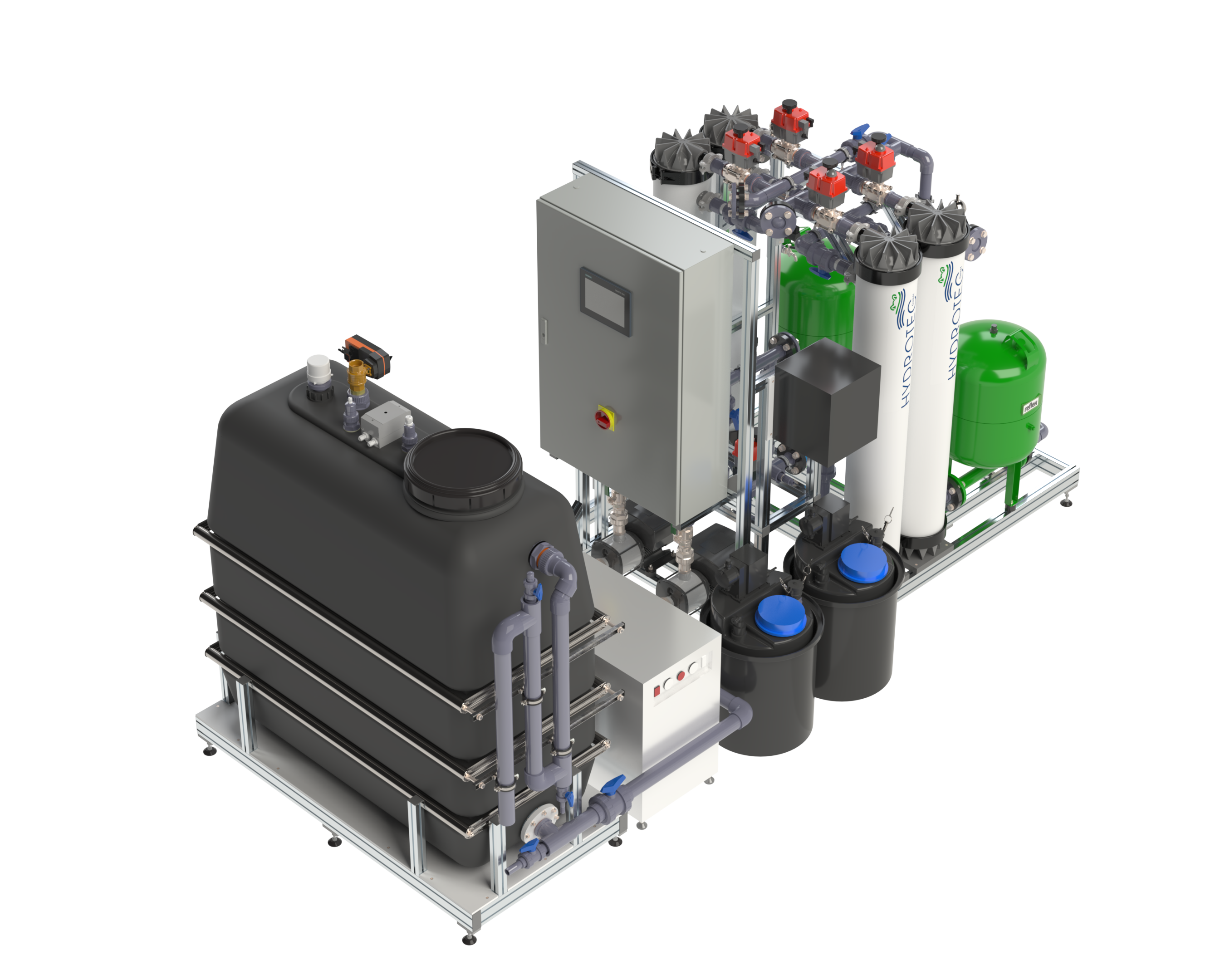
Advanced ultrafiltration systems for high‑risk water systems.
See MoreOur Offering
We assess the specific risk profile of the building - its water system configuration, occupancy type, and existing control measures - before recommending the most appropriate solution. Where a secondary disinfection system is being introduced as an alternative to full thermal control, we work with clients and their appointed Legionella risk assessors to ensure the approach is correctly documented within the water safety plan.
- System assessment and technology selection
- Supply, installation, and commissioning
- Integration with existing water safety plans and risk assessment frameworks
- Ongoing maintenance and chemical supply where required
- Water sampling and microbiological testing support
- Compliance documentation aligned to ACOP L8 and HSG 274